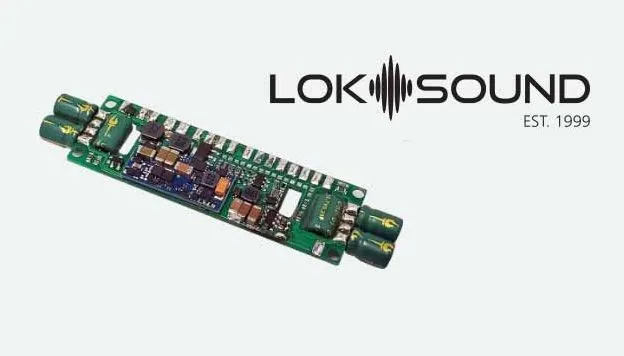
ESU LokSound
ESU 58921, LokSound 5 DCC Direct With Integrated PowerPack, Sound Decoder, HO Scale
$120.90In stock · ships in 2–3 business days
- USPS tracked & insured. UPS on request. We ship worldwide.
- Satisfaction guarantee. Return or exchange per our return policy.
- Real DCC tech support. Call 800-978-3472, Mon – Fri, 9:00 am – 5:00 pm ET.
Want us to install it?Our bench handles HO DCC & sound installs.
Get a quoteLokSound in Action
Don't forget your TDS Speakers & Enclosures!
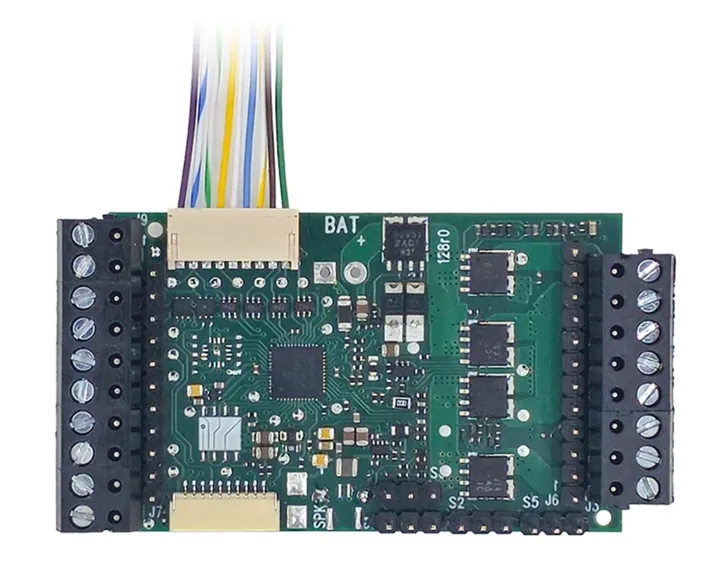
ESU 58921, LokSound 5 DCC Direct Board Style Sound Decoder With Integrated Power Pack
1.5amp 17mm x 69mm
For use in : HO / S
The LokSound 58921 can easily replace boards that provide poor motor control, low volume, or generally inferior sound.
The 58921 will sound even better with our new 11x15mm SuperSonic speaker and sound enclosure kits. Worried about dead spots or pesky yard ladder switches? There’s no need the 58921 has built in ESU PowerPack stay alive capacitors!
Consult your locomotive manual to determine the appropriate type of decoder.
For All ESU LokSound Sound Decoders:
We program the sound file of your choice FREE of charge!
You must select a sound file from the drop-down menus or check the "No Programming Needed" box before adding the sound decoder To the cart! These decoders come blank if not programmed.
Browse American & Australian Sound Files on ESU's website by clicking this link:
If you want your decoder programmed with a European sound file: Choose the sound file from the listings of European sounds on the ESU website: CLICK HERE. If you want to do programming yourself, the ESU LokProgrammer can be purchased separately. However, the Lokprogrammer is not necessarily required as Loksound decoders can be purchased with sound files preloaded and CV changes can be done using DCC control systems. “Full Throttle” Decoder Operation for Diesels It is often challenging to make a scale model perform like it has the mass of a 260,000lb locomotive pulling 5,000 tons or more! Some of this can be done with BEMF - when the loco “feels” a load, it will automatically rev up to work harder to pull this actual load. But this is often a flawed method in modeling. Today, model train car wheels are so free rolling the cars often do not simulate sufficient drag to replicate a typical prototype situation. Also, often we do not sufficiently weigh our cars to represent a scaled-down version of the prototype. One of the biggest problems with BEMF controlled load is in our modeling and operations; we often “simulate” loads inside a closed car. The payload inside a prototype car can weigh as much as 100-tons more than the car itself. This is especially important at operating sessions. Empties in and Loads out or vice versa. There is no way for a decoder to know the proposed weight of the cars it is pulling. Our “car cards”, showing whether a car is loaded or empty, are seen only by the operator, not by our decoders! To compensate for what the decoder cannot know, ESU has created Full Throttle decoder features! FT features include “Drive Hold”, “Run 8”, “Coast”, improved “Dynamic Brakes” and a new “Independent Brake” feature. Operating Modes The LokSound 5 decoder supports the Märklin® braking sections, ZIMO® HLU braking commands or the Lenz® ABC system. Braking with DCC brake generators or with DC is also possible. The locomotive with a LokSound 5 decoder will also come to a halt when a Selectrix® braking diode is switched into the circuit. The ABC push pull feature enables the automatic commuting between two stations. The LokSound 5 decoder is suitable for analog DC operation, AC and DCC command control. Sound The volume of all individual sound elements may be adjusted separately. The outstandingly flexible sound engine, without a rigid flow chart, facilitates a prototypical simulation of all conceivable rail movements. Three separately adjustable braking functions and two alternative load scenarios provide you with maximum control of your locomotives. Functions Motor control The LokSound 5 DCC Direct, with integrated PowerPack decoder delivers up to 1.5A motor current enough juice for older engines. Energy Storage The LokSound 5 DCC Direct, with integrated PowerPack reliably supplies energy to your locomotive when traversing dirty track or long turnout ladders. With its energy storage (1 Farad capacity) the unit supplies power to all light and motor functions as well as to the sound module. Subject to the energy consumption of your model it may continue to move for up to three seconds. The on board PowerPack incorporates an integral charging circuit controlled by the decoder. Because of this there are no limitations or need to disconnect it during programming like some non-ESU "keep-alive" devices. In order to avoid an undue load on the booster in case there are several models in the same booster sector, the charging current is limited.
Leave the European sound file number and description in the NOTES section when you checkout.
The V5 decoder supports all DCC programming modes and thanks to RailCom® you may read out the CV values on the main, provided you have a command station supporting RailCom®. There are utility registers for command stations that only facilitate programming of CVs ranging from 1 to 255.
The LokSound V5 decoder can reproduce up to 10 channels simultaneously. Each channel offers up to 16 Bit / 31250 kHz and for all practical purposes, one cannot detect any difference to the original Prime Mover A dual class D audio power amplifier with 3W output power feeds the speakers with a permitted impedance of 4 – 32 Ohms. The huge 128 MBit sound memory assures sufficient storage capacity.
Subject to the type of interface, every LokSound V5 Micro has at least 6 amplified outputs as well as one logic output with multiple lighting functions available. The brightness of each output may be adjusted separately.
The LokSound V5 Micro decoder supplies up to 0.75A motor current and motor control has been improved. A variable PWM pulse frequency ranging from 10 kHz to 50 kHz results in silent operation, particularly for coreless motors making motor hum a thing of the past. Load control can now be adjusted with up to 10 separate CVs and will manage even the most difficult motor control issues. The unique “Auto-Tune” function facilitates the automatic calibration of the decoder to perfectly match the motor.
Shipping
Most in-stock orders ship within 2–3 business days. We normally ship via USPS with tracking and insurance. UPS is available on request (add a note at checkout). Shipping charges are based on the items ordered, package size and weight, destination and shipping method. We ship worldwide.
Pre-orders
We don’t charge your card when you place a pre-order. Your card is charged only when the item is available and your order is being prepared for shipment.
Returns
When you buy from Tony’s you buy with confidence. If you don’t like it, send it back for a refund or exchange (subject to a restocking charge at our discretion). New locomotive warranty issues are handled through the manufacturer. Read the full policy.
You may also need

ESU LokSound
ESU 58926, LokSound 5 Nano DCC Sound Decoder With 6-Pin Connector, N Scale
$97.50
In stock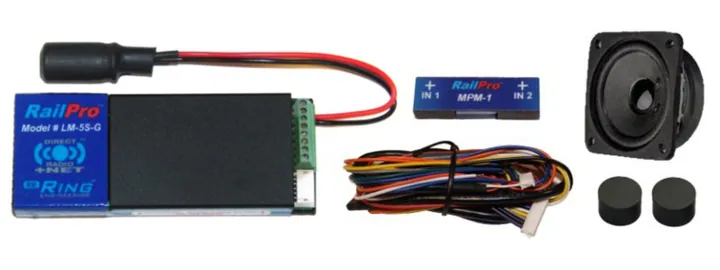
Ring Engineering
Ring Engineering RAKS-2, RailPro G Scale Kit to Add Sound to an Analog Locomotive
$209.95
In stock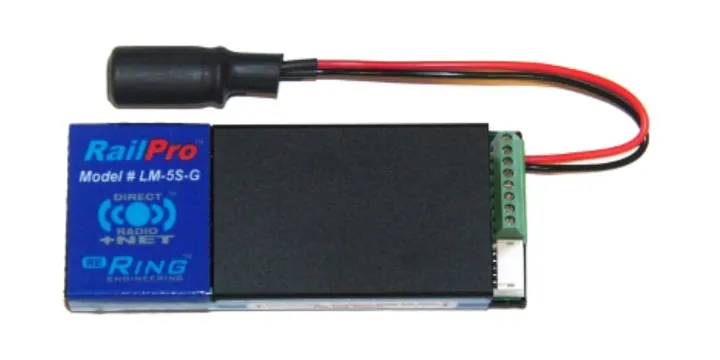
Ring Engineering
Ring Engineering LM-5S-G, RailPro G Scale Locomotive Module With Sound
$155.95
In stock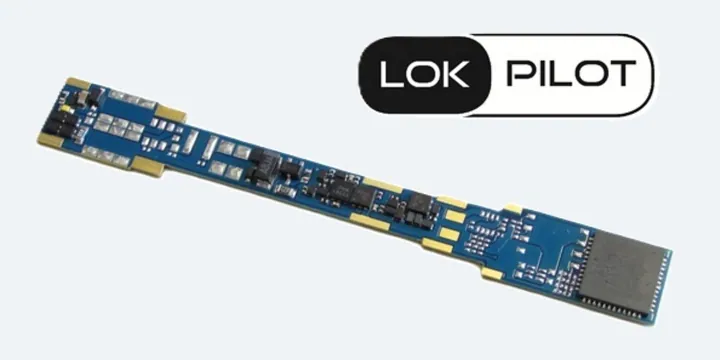
SoundTraxx
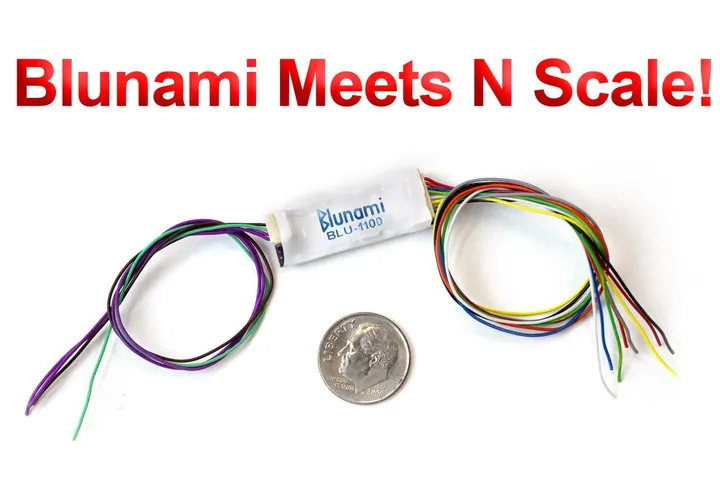
SoundTraxx 886601, Blunami BLU-1100 Bluetooth Controlled Tsunami2 DCC Sound Decoder, Electric
$140.75
In stock