A Practical Guide to Finding and Fixing Model Railroad Short Circuits
Few things are more frustrating than powering up your layout, setting a locomotive on the rails, and having everything shut down because of a short circuit.
If your DCC layout keeps shorting out, the good news is that the problem is usually something simple: a wiring mistake, an out-of-phase rail connection, a reverse loop issue, a turnout problem, or a locomotive or piece of rolling stock creating a momentary short.
The key is to troubleshoot the short systematically instead of guessing.
In this Tony’s Tips article, we’ll explain the most common causes of shorts on a DCC layout, how to isolate the problem, and how products like the PSXX electronic circuit breaker can help protect your railroad and make troubleshooting much easier.
What Happens When a DCC Layout Shorts?
A short circuit happens when the two rails are connected together electrically in a way they should not be. On a DCC layout, that usually means the command station or booster detects excessive current draw and immediately shuts down to protect itself.
Typical symptoms include:
- The system shuts down as soon as track power is turned on
- The short only happens when a locomotive enters a certain section of track
- The short happens when a turnout is thrown
- The short appears only when metal wheels pass through a turnout or crossing
- One district shuts down while the rest of the railroad keeps running
That last one is actually ideal — and it is one reason many modelers use electronic circuit breakers such as the PSXX. Instead of shutting down the entire layout, a properly divided railroad can isolate the problem to one section.
The Most Common Causes of Layout Shorts
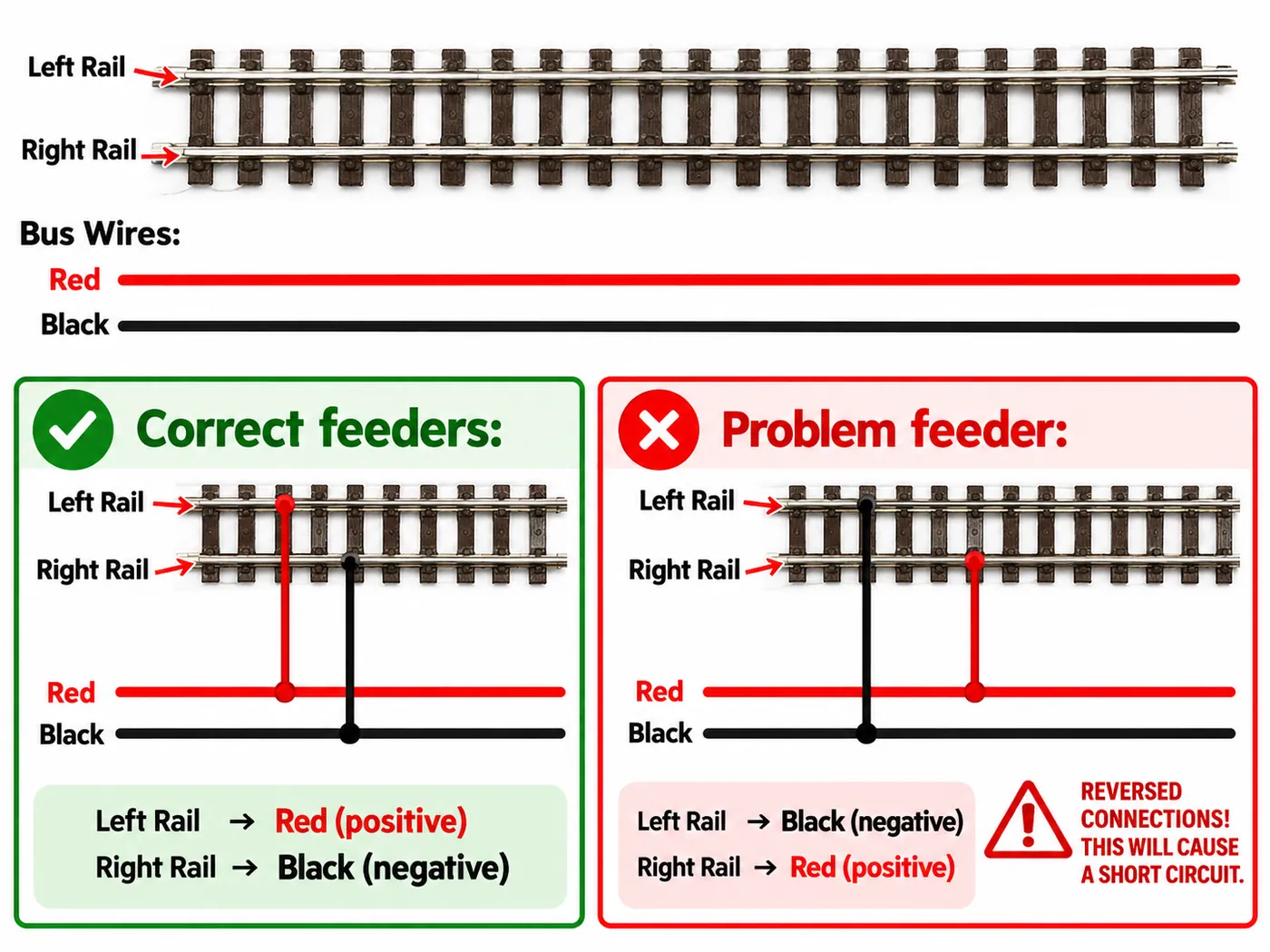
1. Feeder Wires Reversed
One of the most common causes of a short is simply a feeder wired backwards.
For example, if Rail A is connected to the “left rail bus” everywhere else, but one feeder accidentally connects Rail A to the “right rail bus,” you have created a direct short.
Diagram A: Correct Feeder Wiring
Track:
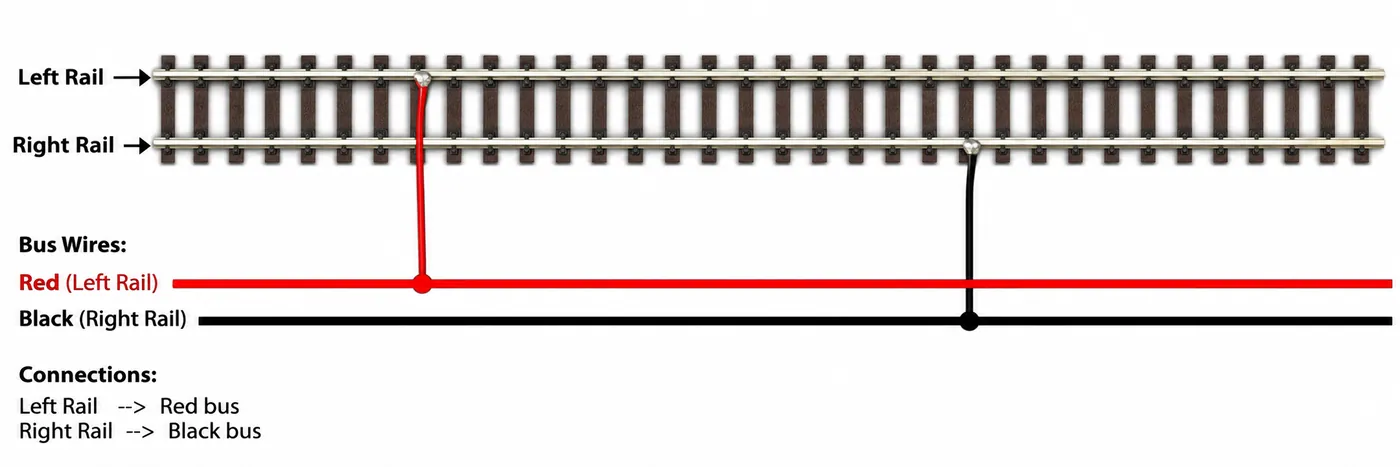
Diagram B: Reversed Feeder Causing a Short
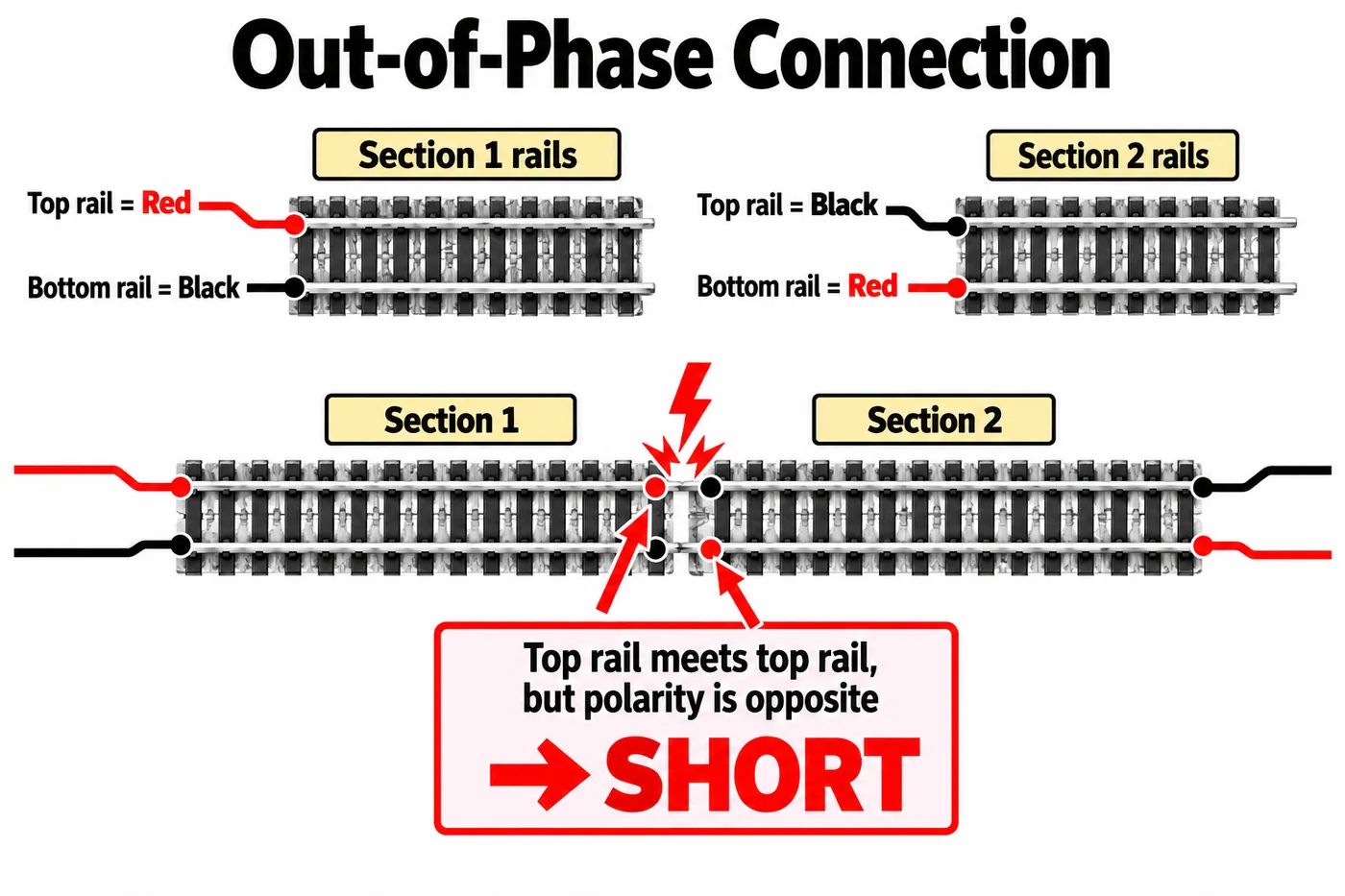
2. Out-of-Phase Track Connections
This often happens when connecting loops, passing sidings, crossovers, or track sections built at different times.
If the rails do not maintain the same polarity relationship throughout the layout, a short may occur where sections meet.
Diagram C: Out-of-Phase Connection
3. Reverse Loops, Wyes, and Turntables
Any track arrangement where a train can re-enter the same track facing the opposite direction creates a polarity conflict.
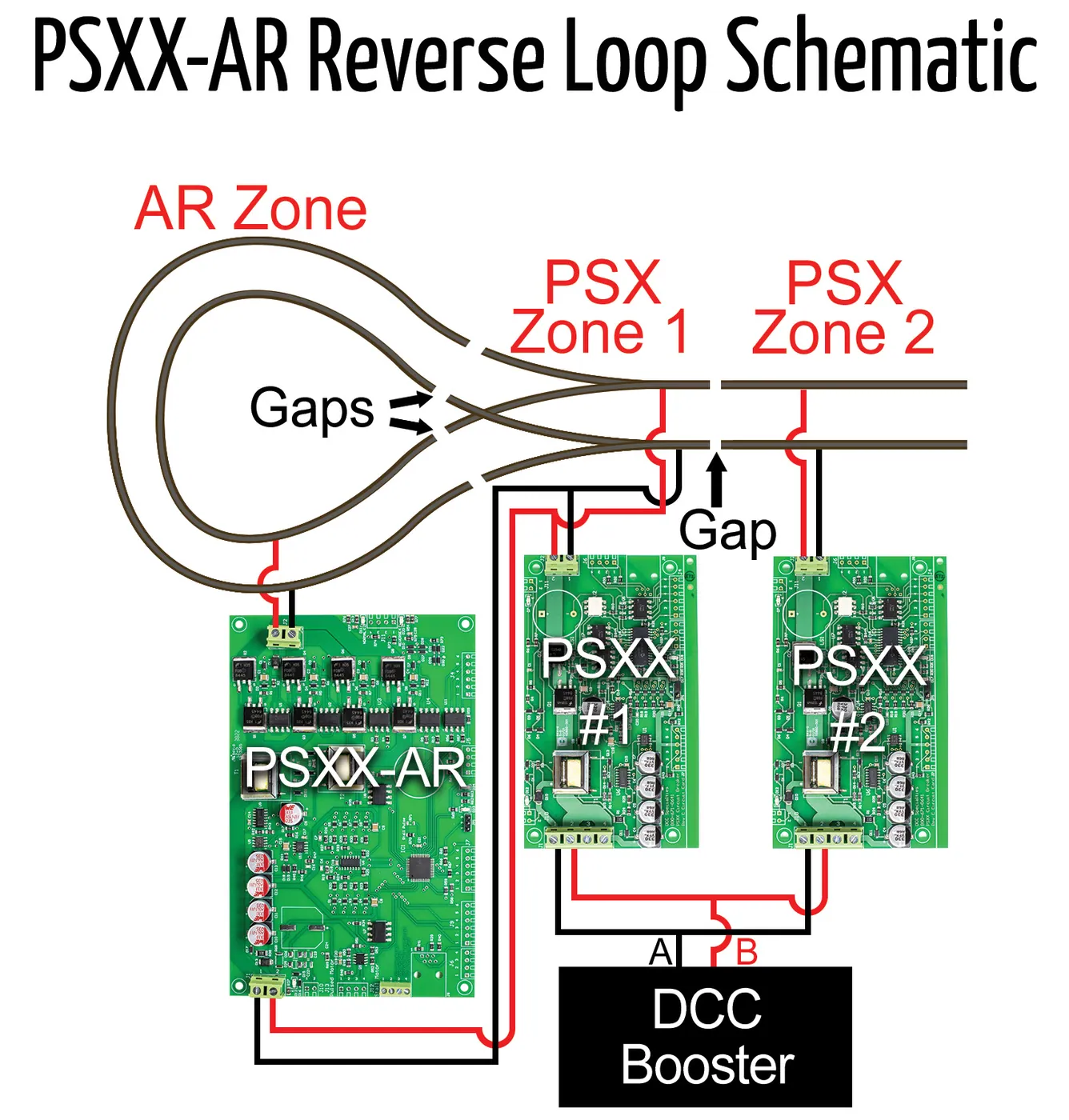
At some point, the rails in the reversing section meet the rails of the main line with opposite polarity. Without gaps and an auto-reverser, this creates a short.
This is not a wiring mistake — it is a normal electrical condition that must be managed with an auto-reverser, such as a PSXX-AR.
Diagram D: Reverse Loop
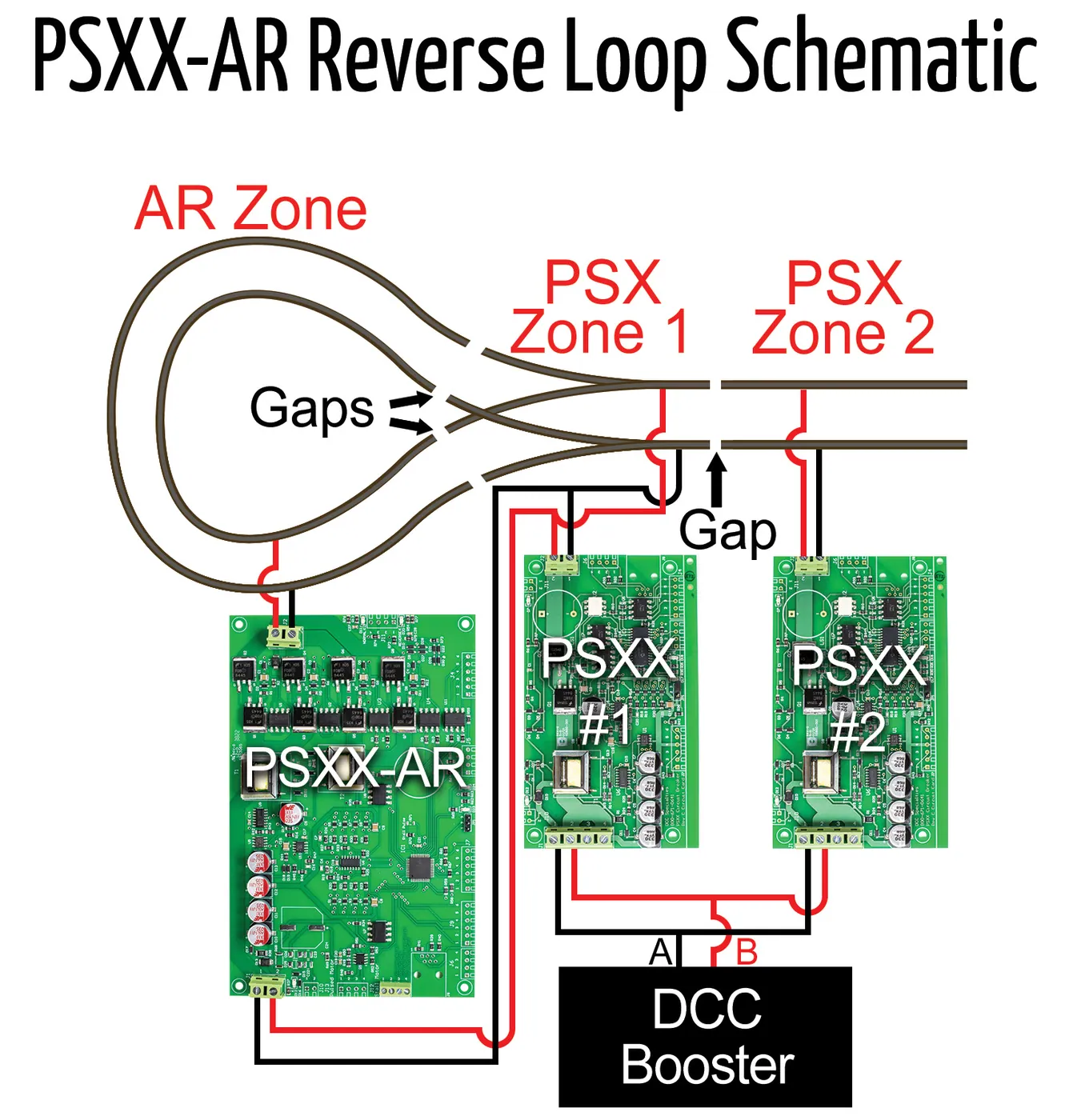
Diagram E: Wye Tail Reverse Section Wiring
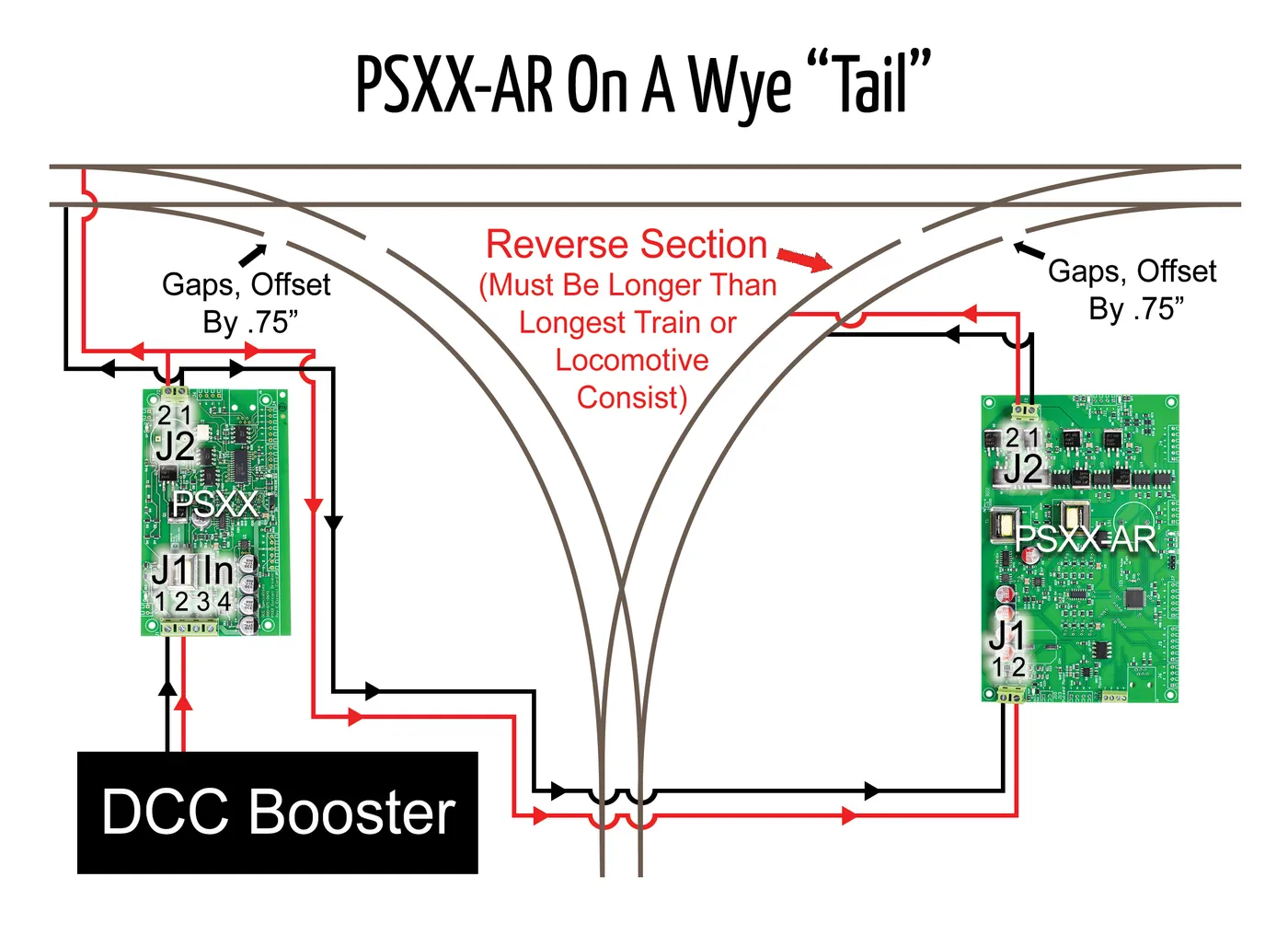
Diagram F: Wye Leg Reverse Section Wiring
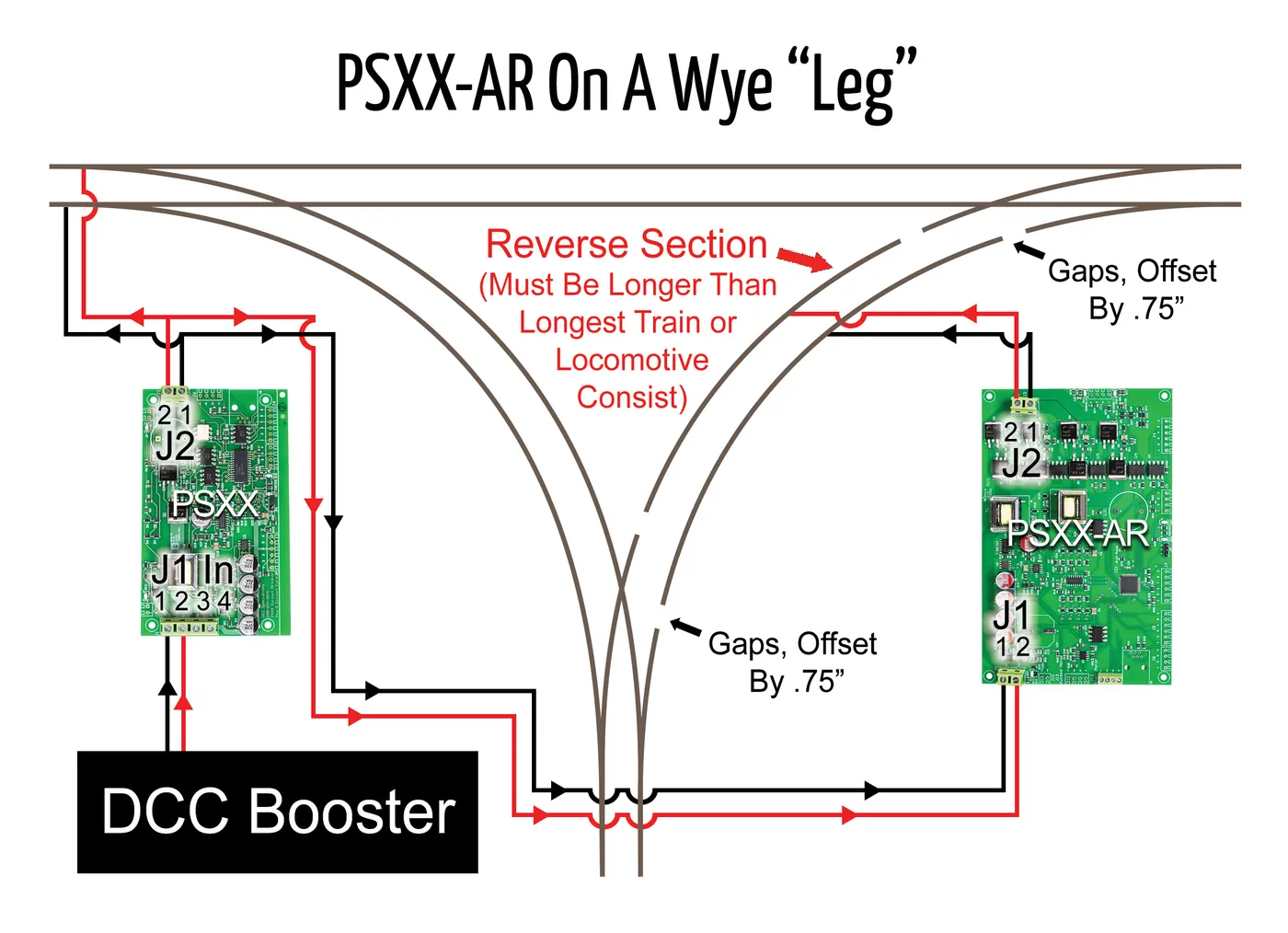
Important: The reversing section must be fully isolated with gaps, and the train must fit inside that section without bridging both ends at the same time.
4. Turnout Problems
Turnouts are another major source of shorts. Common issues include:
- Metal wheels bridging rails at the frog
- Incorrect frog wiring
- Stock rails and closure rails creating a conflict
- Power-routing turnouts wired incorrectly
- Two turnouts creating an out-of-phase crossover
Diagram G: Turnout Frog Short Example
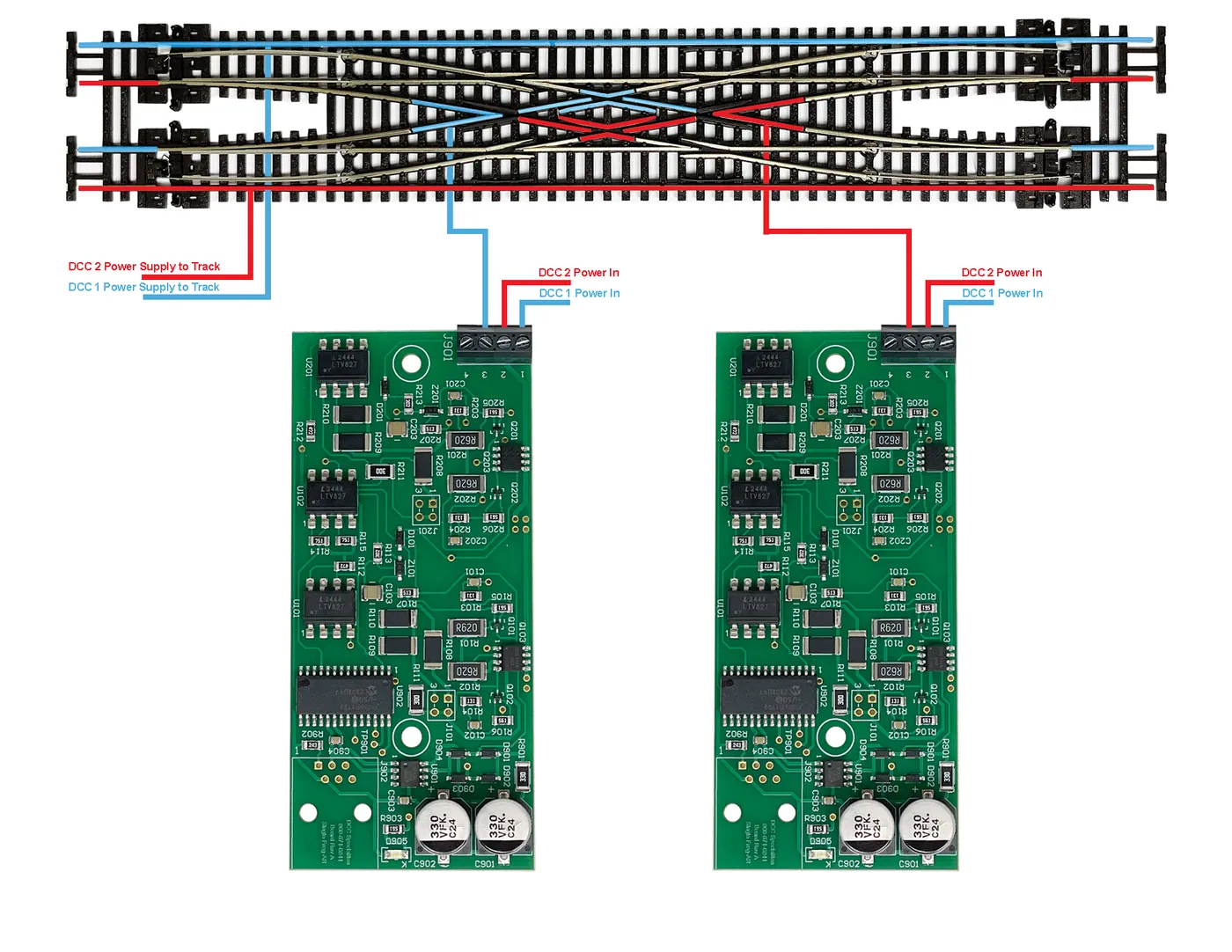
If the frog polarity is incorrect, a wheel can momentarily connect opposite polarities and trip the system.
This is especially common with:
- Electrofrog-style turnouts
- Hand-laid turnouts
- Double-slip switches
- Crossovers
- Walthers/Shinohara style special trackwork
The Frog-AR1 and Frog-AR Quad are two devices that can solve frog polarity issues.
5. Metal Wheels or Equipment Problems
Sometimes the short is not in the track wiring at all. It may be caused by:
- A derailed metal wheelset
- A wheel out of gauge
- A locomotive with a loose wire
- A metal coupler trip pin contacting a live rail
- A tool or screw left across the rails
- A passenger car or caboose with lighting pickups wired incorrectly
If the short only happens when a specific locomotive or car enters a section, inspect that piece of equipment closely.
6. Booster Boundaries or Power District Boundaries
On larger layouts, the railroad is often divided into multiple power districts. If two adjacent districts are not in phase, or if gaps are missing or bridged, a short can occur when a locomotive crosses the boundary.
Diagram H: Proper Power District Separation
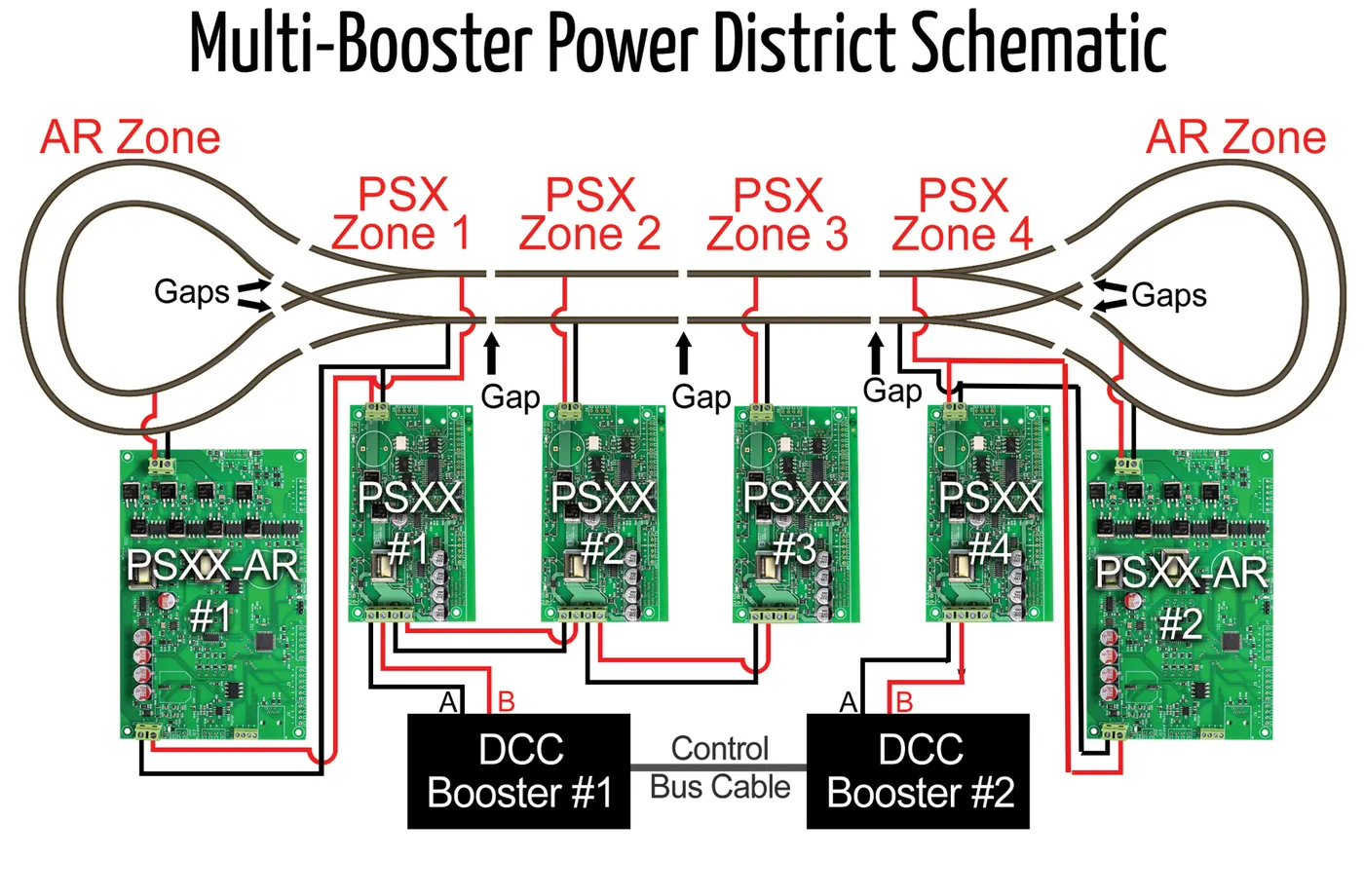
If the districts are set up correctly, a short in District PSXX #1 should trip PSXX #1 without shutting down District any of the other PSXX districts.
Start Troubleshooting by Dividing the Problem
The fastest way to find a short is to narrow the problem area.
Step 1: Determine Whether the Short Is Everywhere or Only in One Area
Ask yourself:
- Does the short happen immediately when power is turned on?
- Or only when a train enters a certain section?
- Or only when a turnout is thrown?
If the short occurs immediately, it is often a wiring issue.
If the short only occurs when something moves, it may be:
- a reverse loop
- a turnout issue
- a locomotive problem
- a wheel bridging a gap or frog
A Simple Short-Finding Process
Step 2: Remove Everything From the Track
Take all locomotives and rolling stock off the rails.
Then turn the layout back on.
- If the short is gone, the issue is likely with a locomotive or car
- If the short remains, the issue is probably in the wiring or track
Step 3: Isolate Districts or Sections
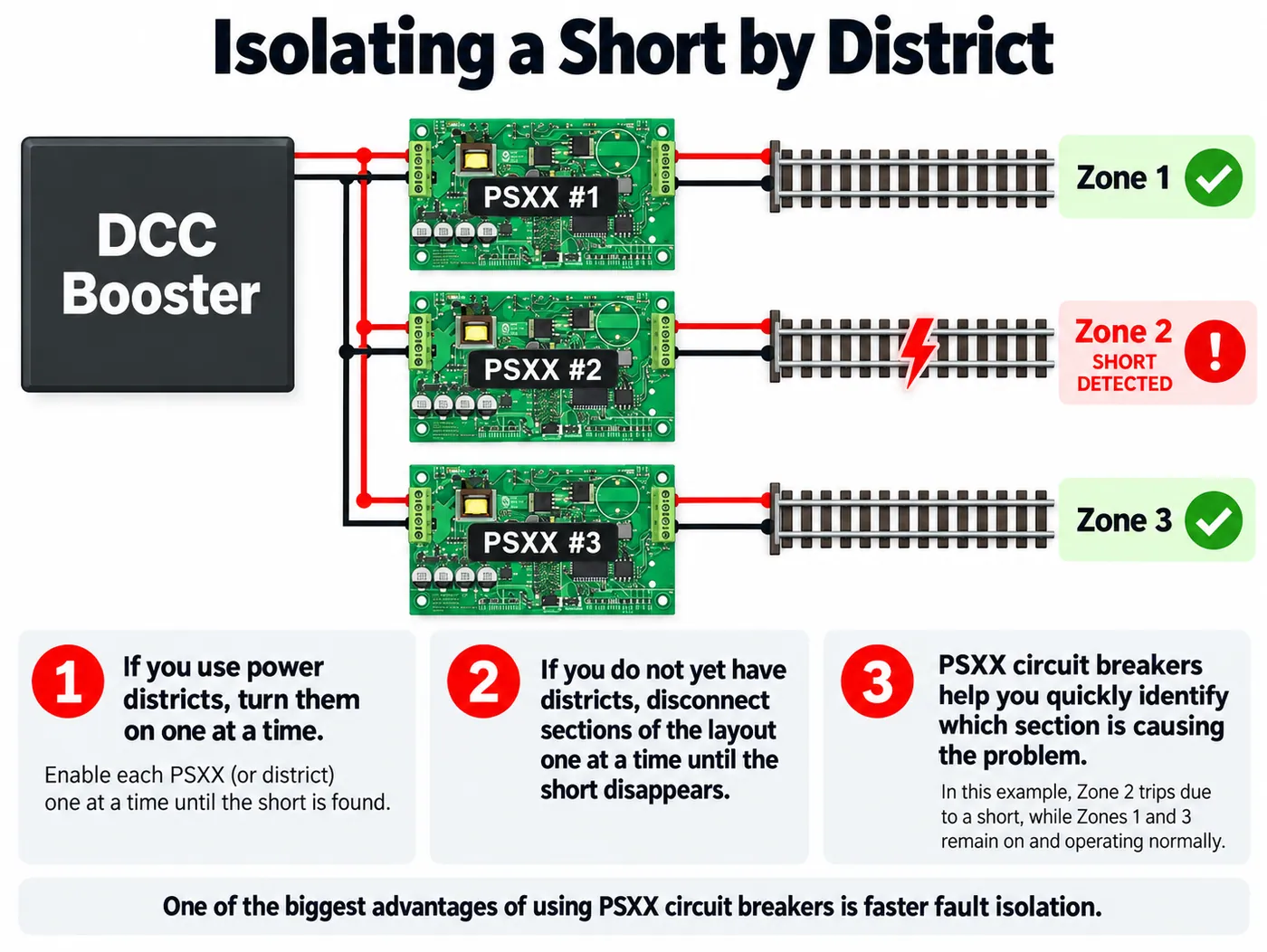
If you use power districts, turn them on one at a time.
If you do not yet have districts, disconnect sections of the layout one at a time until the short disappears.
This is one of the biggest advantages of using PSXX circuit breakers: they help you quickly identify which section is causing the problem.
Diagram I: Isolating a Short by District
Step 4: Inspect the Last Area Worked On
If the short appeared after recent work, start there.
Check for:
- feeders soldered to the wrong rail
- bus wires crossed
- gaps accidentally filled with solder
- rail joiners connecting sections that should be isolated
- turnout frog wires touching the wrong polarity
- stranded wire whiskers touching adjacent terminals
Very often, the problem is in the newest wiring or trackwork.
Step 5: Check Reverse Sections
If the short appears when a train crosses gaps:
Confirm that:
- both rails are gapped at both ends
- the reversing section is powered only through the auto-reverser
- no feeder from the main bus is accidentally connected inside the reversing section
- the section is long enough for the entire train or locomotive
Diagram J: Correct Reverse Section Gapping
Step 6: Check Turnouts and Crossovers
If the short appears when a turnout is thrown or when wheels pass through a frog:
- verify frog polarity
- check wheel gauge
- inspect for points touching opposite polarity rails
- inspect crossover wiring for out-of-phase rails
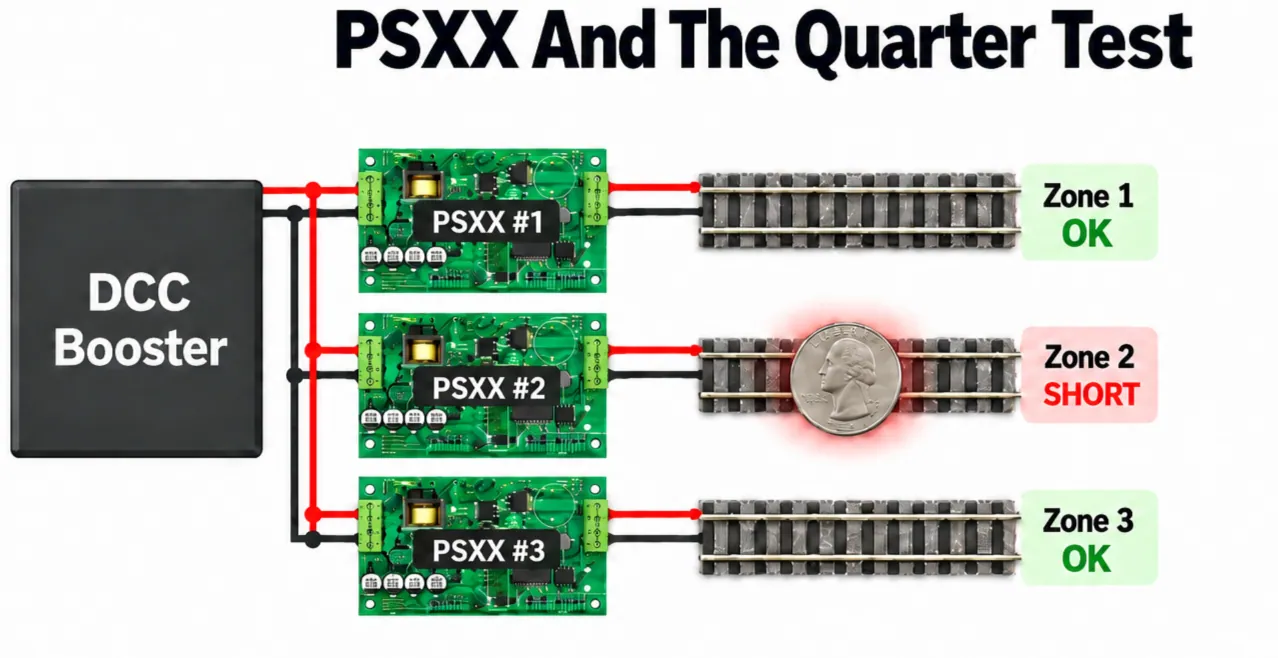
A quarter test can also help verify protection.
What Is the Quarter Test?
The “quarter test” is a simple way to confirm that your circuit protection is working correctly.
Place a metal coin, such as a quarter, across the rails in a protected section. A properly set breaker should trip quickly.
If the breaker trips quickly, that is good. If the command station shuts down first, or the breaker does not trip promptly, your protection may need adjustment.
Diagram K: Quarter Test
Common Short-Circuit Mistakes We See
Here are some of the most common causes of repeated shorts:
- One feeder installed backwards
- Missing gaps between power districts
- Reverse loop section not fully isolated
- Turnout frog wired to the wrong polarity
- Auto-reverser fed incorrectly
- Metal wheels bridging a frog or insulated gap
- Boundary between districts out of phase
- A locomotive or lighted car with an internal wiring fault
A Good Rule of Thumb
If the short happens:
- Immediately when power is turned on
Suspect track wiring, reversed feeders, or missing gaps - Only when a turnout is thrown
Suspect frog polarity or turnout wiring - Only when a train crosses a gap
Suspect a reverse loop or out-of-phase boundary - Only with one locomotive or car
Suspect the equipment - Only in one area
Suspect local feeders, turnouts, or a district boundary
Most shorts can be found by working through the problem one step at a time:
- Remove all equipment
- Divide the layout into sections
- Test one district at a time
- Inspect recent work
- Check reverse sections and turnout wiring
- Use proper circuit protection
For many model railroaders, the best long-term solution is not just fixing the immediate short — it is designing the layout so shorts are easier to find and less disruptive when they happen.
That is where PSXX electronic circuit breakers and PSXX-AR auto-reversers can make a big difference.
They help protect your DCC investment, simplify troubleshooting, and keep the rest of the railroad running when one section develops a problem.
If you are planning a new layout or upgrading an existing one, dividing the railroad into protected power districts is one of the smartest improvements you can make.
Need Help Protecting Your Layout?
Tony’s Train Exchange offers DCC protection products to help you build a more reliable layout, including:
- PSXX electronic circuit breakers
- PSXX-AR auto-reversers
- DCC wiring and installation accessories
- Expert advice for troubleshooting and layout planning
If you are not sure how to divide your layout into power districts, or which protection products are right for your railroad, feel free to contact us — we are happy to help.