The Answer Isn't the Number of Locomotives… It's the Amps.
For many model railroaders, one of the most common questions is:
"How many locomotives can I run with a 5-amp DCC booster?"
The answer isn't based on the number of locomotives.
It's based on how much current they're actually drawing.
Understanding this simple concept can save you hundreds of dollars in unnecessary boosters—or prevent frustrating shutdowns during an operating session.
The Biggest DCC Myth
Many hobbyists have heard rules like:
- A 5-amp booster runs 10 locomotives.
- A 5-amp booster runs 20 locomotives.
- One amp equals four locomotives.
None of these are universally true.
A 5-amp booster doesn't count locomotives.
It measures electrical current (amps).
One modern HO locomotive with sound may draw only 0.25 amps while cruising, while another older locomotive may draw over 1 amp under load.
The booster doesn't care how many locomotives are on the track—it only sees total current.
Understanding Current Draw
Every locomotive uses a different amount of power depending on:
- Scale
- Motor design
- Decoder
- Speaker volume
- Lighting
- Smoke units
- Mechanical condition
- Train length
- Grades
- Speed
For example:
| Locomotive | Typical Running Current |
|---|---|
| Modern N Scale | 0.10–0.20 A |
| Modern HO without sound | 0.15–0.30 A |
| Modern HO with sound | 0.25–0.50 A |
| Older HO locomotive | 0.50–1.00+ A |
| O Scale | 0.75–2.00+ A |
Notice how the range varies dramatically.
Idle Locomotives Count Too
Here's something many modelers overlook.
A sound decoder sitting still consumes power.
A parked locomotive may draw:
- Decoder electronics
- Sound processor
- Amplifier
- Lighting
- Stay Alive charging
- Smoke generator (if equipped)
Typical idle current:
- Silent decoder: 20–50 mA
- Sound decoder: 75–200 mA
Twenty parked sound locomotives could consume nearly 2 amps before a single train starts moving.
Real-World Examples
Example 1
10 HO locomotives with sound
Running current:
0.35 amps each
Total:
10 × 0.35 = 3.5 amps
A 5-amp booster handles this easily.
Example 2
Eight older brass locomotives
Current draw:
0.75 amps each
Total:
8 × 0.75 = 6 amps
A 5-amp booster will overload.
Example 3
Large operating session
- 8 moving trains
- 18 parked sound locomotives
- Passenger lighting
- Caboose lighting
Even if only a few trains are moving, the idle equipment continues drawing current.
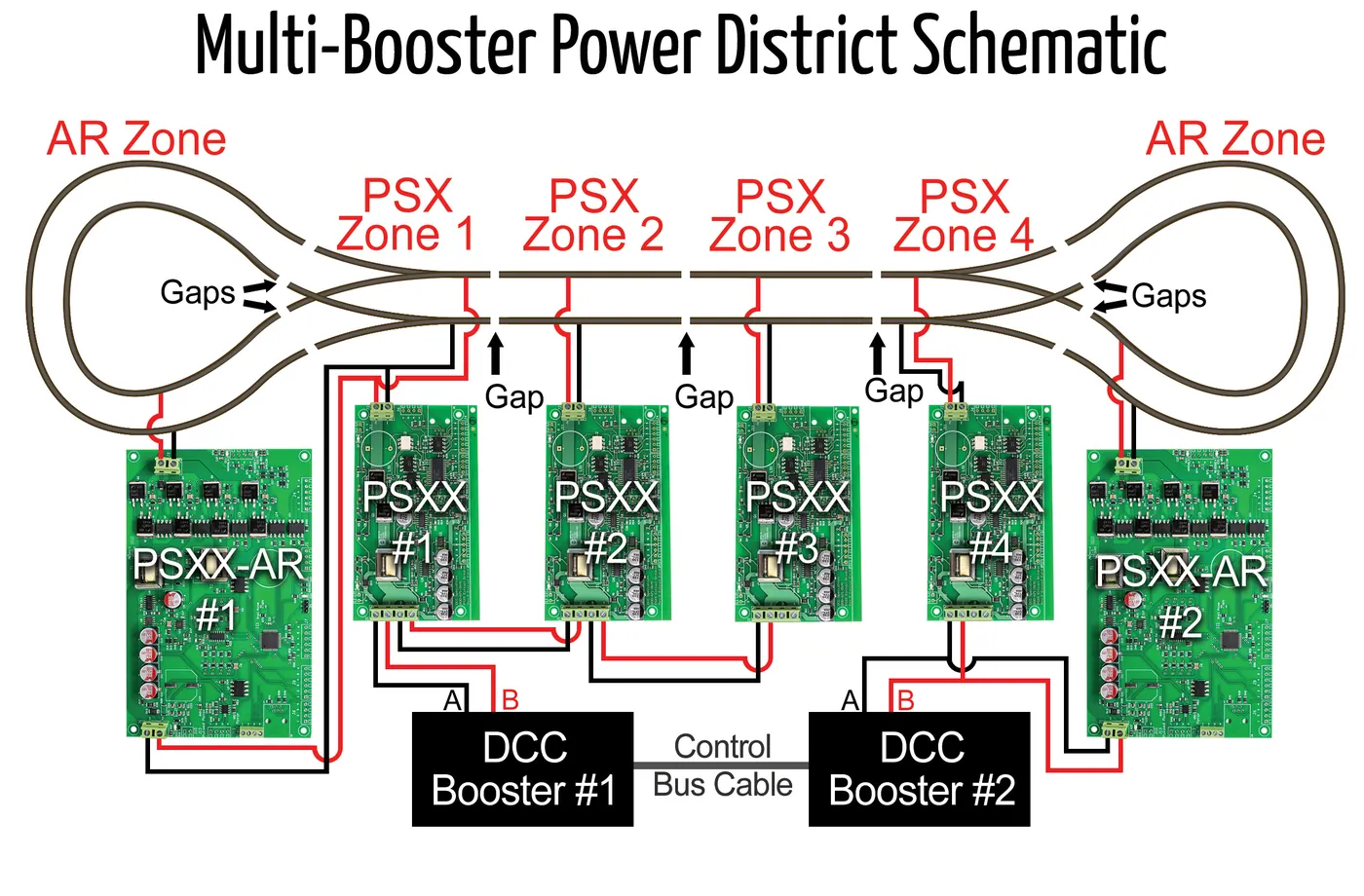
This is why larger layouts benefit from multiple power districts.
Stall Current Matters
Running current isn't the only specification.
Every locomotive also has a stall current.
This is the current the motor draws when prevented from turning.
Examples:
- Modern HO: 0.8–1.5 amps
- Older HO: 2 amps or more
- O Scale: 3–5 amps
If several locomotives stall simultaneously during a derailment or pile-up, current can spike quickly.
Good circuit protection becomes essential.
Accessories Also Use Booster Power
Remember that your booster powers more than locomotives.
It may also supply:
- Passenger car lighting
- Caboose lighting
- DCC Accesroy Decoders [ie turnout control]
- Detection-equipped rolling stock
- Function-only decoders
Every accessory consumes part of your available current budget.
How to Measure Your Actual Current
Guessing isn't necessary.
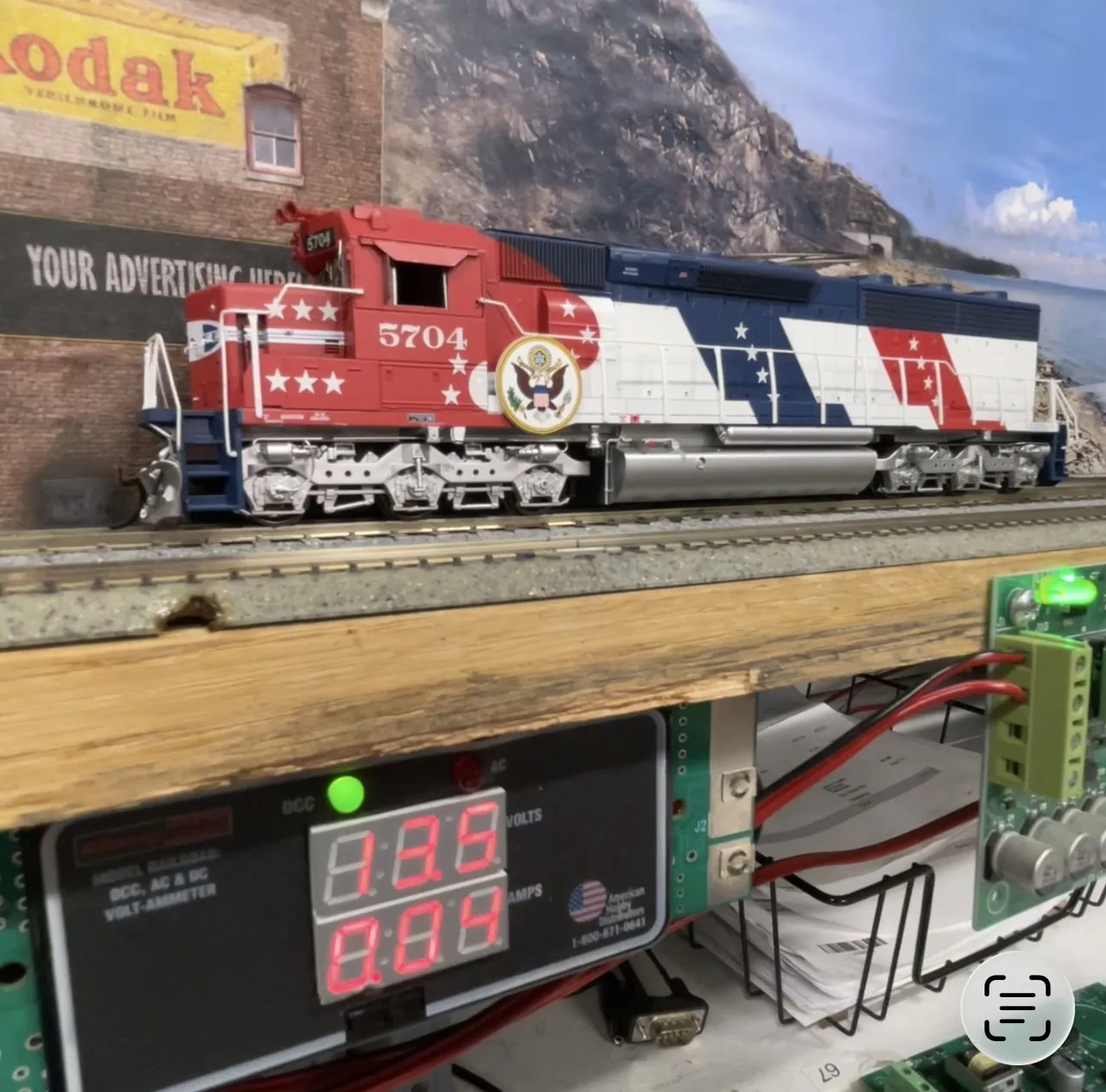
Use a dedicated DCC RRampMeter to measure:
- Track voltage
- Running current
- Idle current
- Accessory loads
Knowing your actual numbers makes booster planning straightforward.
If your layout regularly approaches 4 amps on a 5-amp booster, it's time to consider adding another power district.
Why Multiple Power Districts Are Better
Many modelers assume a larger booster solves everything.
Often it doesn't.
Adding multiple protected power districts provides:
- Better short-circuit isolation
- Easier troubleshooting
- Less disruption during derailments
- Improved reliability during operating sessions
- Reduced chance of shutting down the entire railroad
Instead of one large district, divide the layout into logical operating areas protected by electronic circuit breakers such as the PSXX series of circuit breakers and auto reversers.
A Simple Rule of Thumb
For planning purposes:
Modern HO with sound
- Average: 0.35 amps per running locomotive
Modern HO without sound
- Average: 0.20 amps
N Scale
- Average: 0.15 amps
O Scale
- Average: 1 amp or more
These numbers provide a starting point—not a guarantee.
Always verify your actual equipment.
The Bottom Line
A 5-amp booster can power:
- Five locomotives...
- Fifteen locomotives...
- Or even thirty locomotives...
The determining factor isn't how many locomotives are on the layout.
It's how much current they collectively draw.
By measuring your layout's actual current, accounting for idle sound decoders and accessories, and dividing larger layouts into protected power districts, you'll achieve far more reliable operation than simply installing the biggest booster available.
Tony's Tips
- Don't size your DCC system by locomotive count—size it by measured current draw.
- Leave at least 20–25% headroom in your booster capacity to handle startup surges, sound decoder charging, and unexpected loads.
- Measure your layout periodically with an RRampMeter to understand real-world current usage.
- Protect each power district with a PSXX electronic circuit breaker so one derailment doesn't shut down your entire railroad.
- For larger layouts, adding another protected power district is usually a better investment than simply upgrading to a higher-amperage booster.