Bluetooth Control, Realistic Sound, and DCC Compatibility
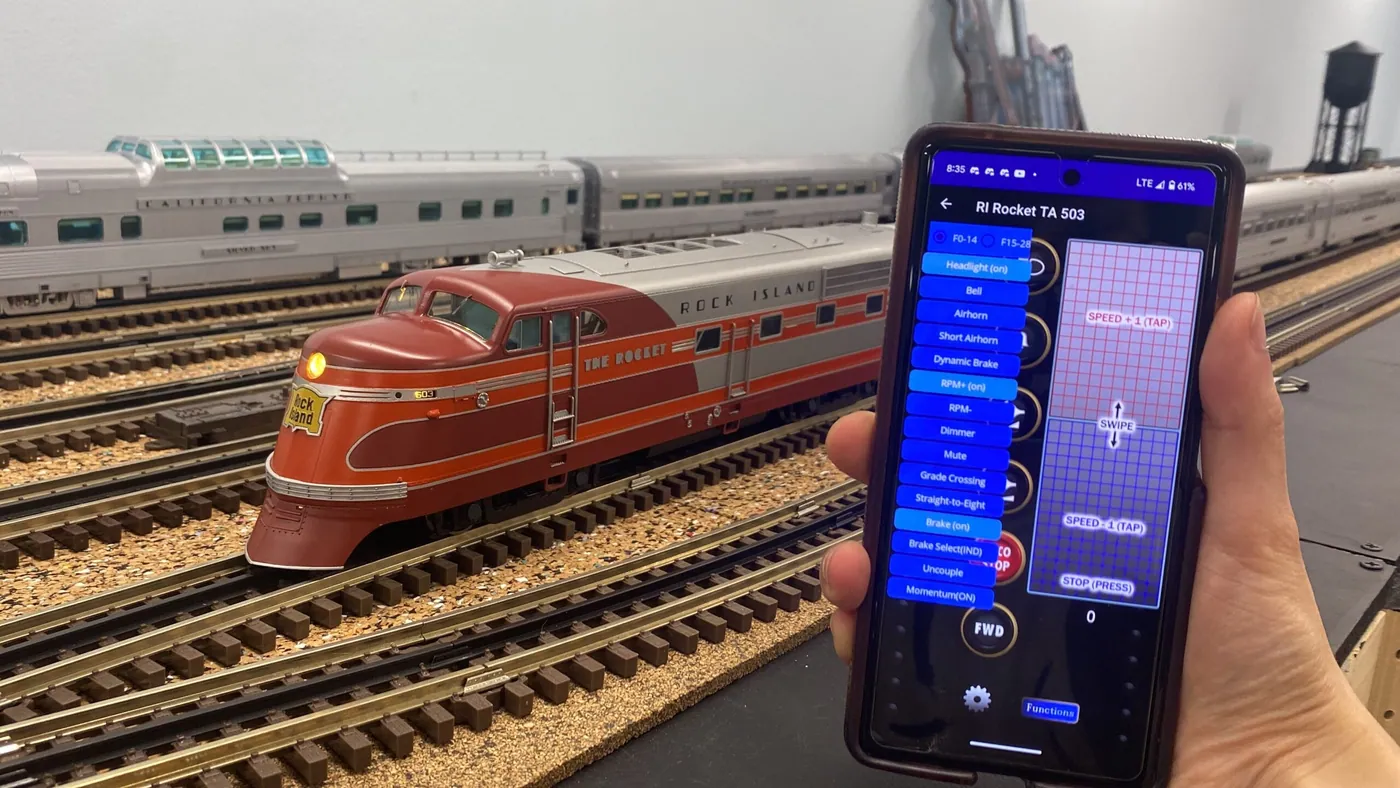
Imagine selecting your locomotive on a phone, sounding the whistle, switching on the lights, and easing away from the station—without needing a DCC command station. Or keeping your existing DCC system while using that same phone to make decoder adjustments without working through pages of CV numbers and pushing buttons on your throttle.
That is the appeal of SoundTraxx Blunami: the sound and operating capabilities of a Tsunami2 sound decoder, combined with a built-in Bluetooth connection for direct control and adjustment from a compatible smart device. Blunami is a complete locomotive decoder, handling the motor, sound, and lighting—not simply an add-on sound board.
How Does Blunami Work?
With Blunami, the app communicates directly with the decoder inside the locomotive over Bluetooth. It does not need to send commands through a computer, Wi-Fi router, or DCC command station. The decoder receives those instructions and controls the locomotive’s motor, lights, and onboard speaker.
The important distinction is that Bluetooth carries the instructions, not the power. The locomotive still needs electricity from the rails or a separately installed onboard battery. Wireless control does not automatically make the locomotive battery-powered or eliminate its dependence on clean track when the rails supply its power.
The free Blunami app is available for compatible Apple and Android devices. Once installed, the app does not require a Wi-Fi connection to operate your locomotives.
Three Ways to Operate
Bluetooth Control
Use the Blunami app to control the locomotive while supplying suitable power through DC-powered rails, DCC-powered rails, or an onboard battery installation. With DC or battery power, a DCC system is not required. The app provides the operating controls.
Conventional DCC Control
Blunami also operates as a conventional DCC decoder. You can use your existing DCC command station and throttle rather than operating from a phone.
An important operating detail: Connecting to the locomotive through the app switches it from DCC control to Bluetooth control. To return to DCC control, disconnect Bluetooth and remove power until the decoder completely powers down, then restore power. An installed CurrentKeeper may keep the decoder alive for several seconds, so allow time for it to shut down.
Conventional Analog DC Control
Blunami can also respond to changing track voltage on an analog DC layout. This differs from Bluetooth operation over DC-powered rails: in analog operation, the power pack controls movement through track voltage; in Bluetooth operation, the app sends the commands.
More Than a Wireless Throttle
One of Blunami’s biggest advantages is easier access to the decoder’s settings.
Traditional DCC programming uses configuration variables, or CVs, to adjust decoder behavior. Blunami still supports that approach, but its app presents many adjustments through named settings, sliders, and drop-down menus. You can select sounds, adjust volumes, change operating characteristics, and read or write CVs through the Bluetooth connection without a separate programming track.
For example, the app can make it easier to choose a different horn or whistle, balance individual sound levels, or adjust sound effects such as reverb and pitch. Instead of treating decoder setup as a separate programming session, you can make adjustments and hear the results while working with the locomotive.
The app selects from the sounds included in the decoder’s purchased sound profile. It is therefore important to choose the appropriate sound profile when ordering; a decoder sold with an EMD diesel sound family will not contain ALCo, GE, steam, Baldwin or electric sound libraries.
Realistic Sound and Operation
Blunami’s Bluetooth connection makes its features easier to reach, but the sound and operating capabilities are just as important.
Steam Locomotives
Steam-equipped Blunami decoders offer selectable whistles, bells, exhaust sounds, and air pumps, along with effects such as injectors, cylinder cocks, and boiler blowdown. Operating features include adjustable steam cutoff and independent and train braking. These controls let an operator do more than change speed and sound the whistle; they provide ways to simulate the work of running a steam locomotive.
Diesel Locomotives
Diesel versions provide selectable prime movers—the diesel engines themselves—along with horns, bells, compressors, and other locomotive sounds. Depending on the selected profile and setup, operators can use automatic or manual engine notching, dynamic-brake simulation, and independent and train braking for more involved operation.
Electric Locomotives and Trolleys
Electric sound profiles are also available, with effects appropriate to electric equipment, including traction-motor sounds, pantograph operation, trolley bells, and passenger-related effects. Blunami is not limited to steam and diesel applications.
Sound That Responds to the Work
Dynamic Digital Exhaust, or DDE, adjusts engine sounds in response to changes in motor load. This can make the locomotive sound as though it is working harder under load rather than simply playing the same sound at a particular speed.
DDE needs to be enabled and calibrated for the individual locomotive. The app provides access to that setup; it should not be assumed to be fully configured just because the decoder has been installed.
Where Can Blunami Be Used?
A small layout without a DCC system. Blunami offers a way to enjoy individual locomotive control, sound, and lighting using the app and a suitable power source. A DCC command station is not a prerequisite for getting started.
An established DCC layout. You do not have to replace your DCC system to use Blunami. An owner can retain conventional throttle operation while using Bluetooth for convenient decoder setup and adjustments, following the power-down procedure when returning to DCC control.
Multiple locomotives and consists. The app supports multi-train operation and consisting, allowing compatible Blunami-equipped locomotives to be grouped for coordinated operation. Each locomotive still needs its own decoder, and a particular decoder connects to only one controlling device at a time.
Battery-powered models. With a properly designed onboard battery installation, Blunami can provide direct wireless control without taking power from the track. This can be especially useful in larger scales [O, G etc.] where space is available for the battery and associated equipment. The battery installation is separate from the decoder purchase and must be planned for the model.
Choosing the Right Blunami Decoder
The Blunami family includes several physical formats. The right choice depends on the locomotive’s available space, electrical connections, motor current, and lighting requirements—not simply its scale.
| Decoder | Typical installation | Maximum motor stall current | Lighting/function outputs |
|---|---|---|---|
| BLU-1100 | Compact universal format for small HO and suitable N-scale models. | 1 amp | 4 |
| BLU-2200 | Universal wired format for HO and suitable smaller S-scale models. | 2 amps | 6 |
| BLU-21PNEM8 | Plugs into a compatible 21-pin NEM motherboard. | 1 amp | 8 |
| BLU-PNP8 | Factory-board replacement for many compatible HO diesel models. | 2 amps | 8 |
| BLU-4408 | Higher-current format with screw-terminal connections for suitable S, O, and large-scale models. | 4 amps | 8 |
Specifications are from SoundTraxx’s individual decoder listings. Confirm the exact model’s fit and electrical requirements before installation.
After choosing the physical format, select the appropriate sound profile. Depending on the decoder format, choices include Steam-2, several diesel sound families, and Electric. SoundTraxx’s sound-selection references help identify which profile contains the sounds needed for a particular locomotive.
What Is Needed for an Installation?
A Blunami installation still requires the same care as any DCC sound-decoder installation. The motor connections must be properly isolated from track power, the decoder must fit safely within the model, and the speaker and lighting connections must meet the decoder’s requirements. A suitable TDS speaker and enclosure are important parts of the installation—not optional details to leave until the end.
Bluetooth simplifies control and setup; it does not eliminate the physical installation work. Likewise, downloading the Blunami app does not add Bluetooth to an ordinary DCC decoder. The locomotive must contain compatible Blunami hardware.
Getting Started with the App
Once the decoder and speaker are correctly installed:
- Install the free Blunami app on a compatible Apple or Android device.
- Apply suitable power to the locomotive and enable Bluetooth on the device.
- Open the app and connect to the locomotive from within the app. Do not pair it through the phone’s ordinary Bluetooth-device pairing menu.
- Begin with a low-speed test, checking direction, lights, and sound before exploring additional settings.
Give the locomotive a recognizable name and review its connection settings, especially what it should do if the Bluetooth connection is lost. These settings matter when operating around other users or moving beyond reliable wireless range.
Videos and Reference Guides
For a practical introduction, SoundTraxx’s “Getting Started with Blunami: Your Wireless Model Train Upgrade!” introduces setup, app connection, and operation without a DCC system. Its “Getting Started with the Blunami App (E1)”video focuses on general settings and key app features.
For written guidance, start with the Steam or Diesel User’s Guide to understand operating features. Use the corresponding Technical Reference for detailed CV definitions, and consult the Steam-2 Sound Selection Reference when choosing steam sounds. SoundTraxx maintains these documents in its Blunami manuals section.
Explore Blunami at Tony’s Train Exchange
In summary, Blunami offers modelers a choice: operate through a familiar DCC throttle, use a phone or tablet for direct Bluetooth control, or build a suitable battery-powered installation. Its combination of sound, motor control, and accessible settings makes it worth considering for both a first sound-equipped locomotive and an established fleet.