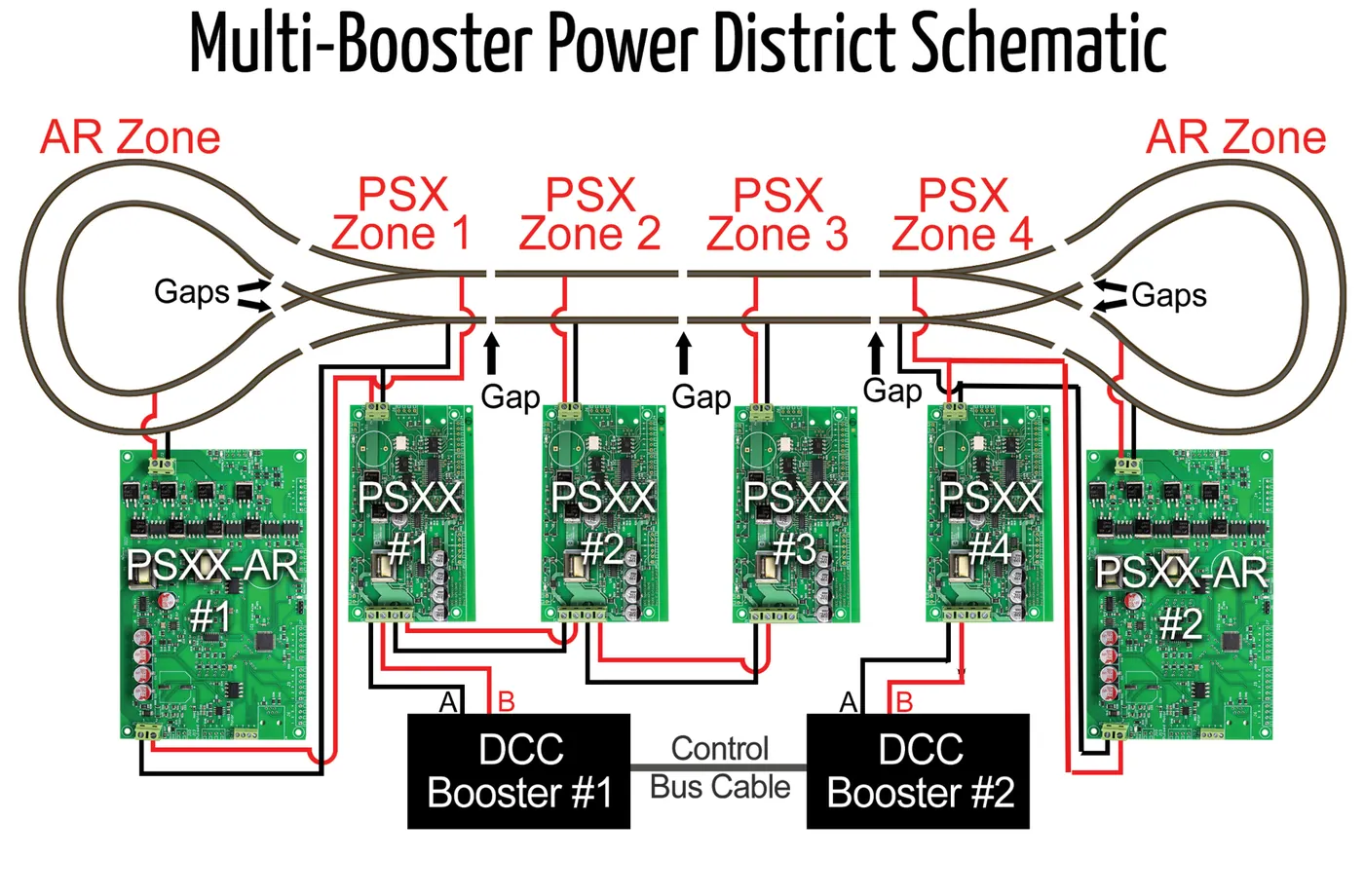
When using multiple boosters with DCC Specialties PSXX circuit breakers, you may notice an important difference between:
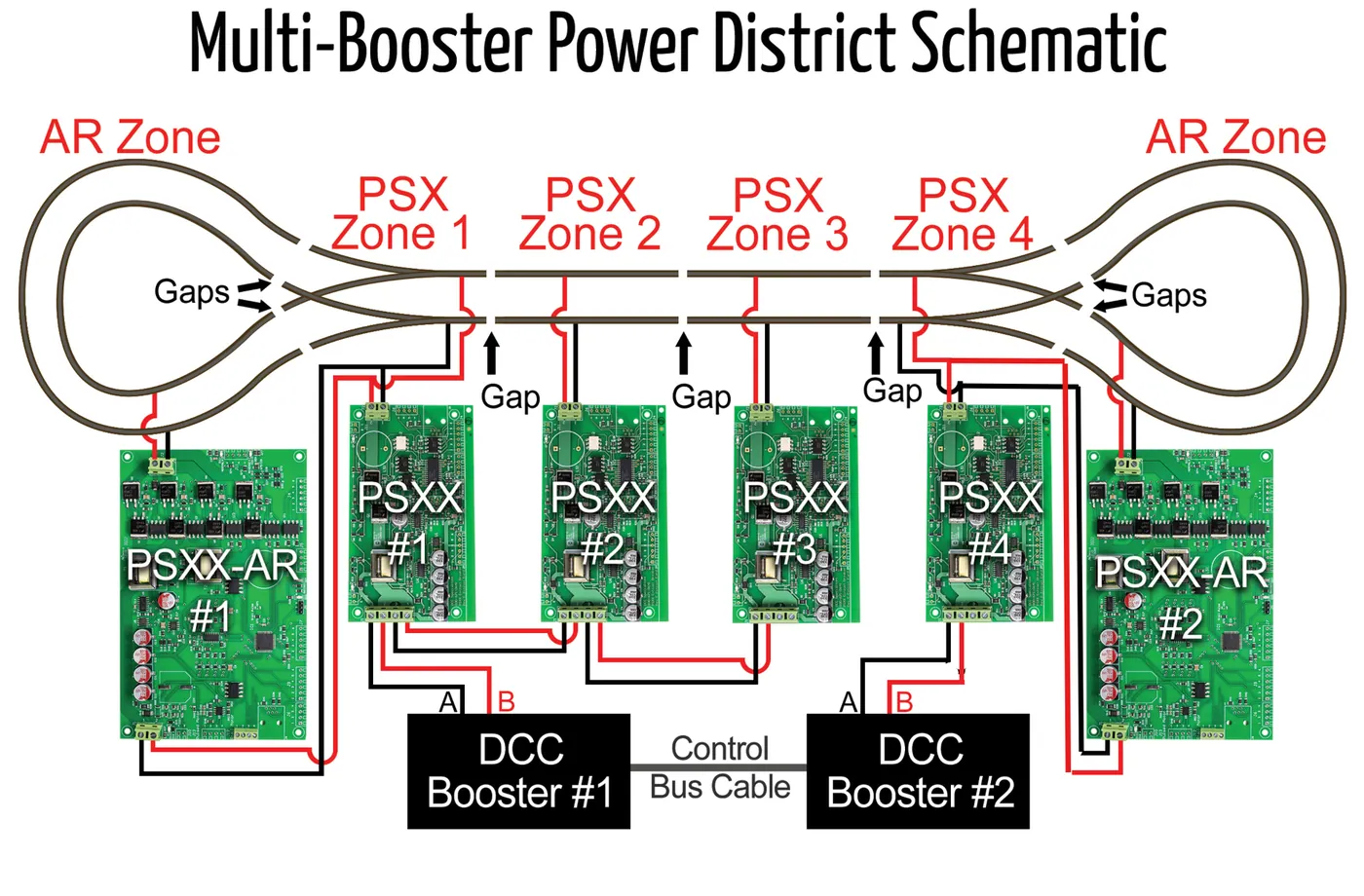
- Crossing between PSXX districts powered by the same booster
- Crossing between PSXX districts powered by different boosters
Understanding why this happens can help eliminate nuisance trips, stuttering locomotives, and shutdowns.
Same Booster Boundaries Usually Work Fine
When a train crosses from one PSXX district to another powered by the same booster, both PSXX units are seeing the same DCC source.
Because the booster waveform and voltage are identical, the locomotive can bridge the insulated gaps without issue.
This is why trains typically move smoothly between districts such as:
- Zone 2 → Zone 3
(on the same booster)
Different Booster Boundaries Are Different
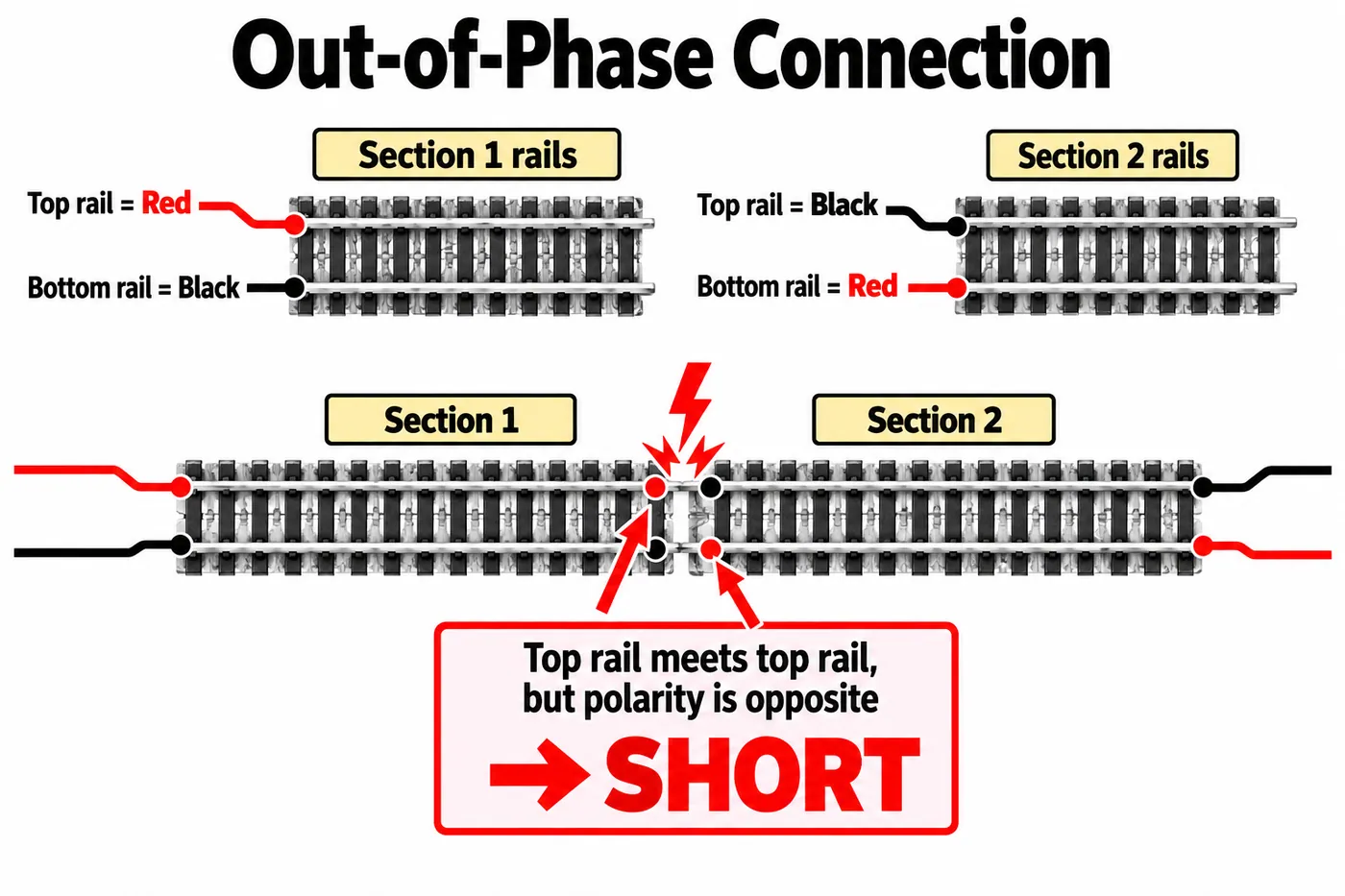
When a train crosses from a PSXX district on Booster 1 to a PSXX district on Booster 2, the locomotive wheels momentarily connect the two booster outputs together.
If the boosters are not perfectly:
- Phase matched
- Voltage matched
- Properly referenced
The PSXX sees this as a fault or current surge.
Typical symptoms include:
- Blue PSXX LED flashing
(current limiting active) - Train hesitation or stuttering
- One district eventually shutting down
- Red PSXX short LED illuminating
Important: Do NOT Immediately Raise the Trip Current
Many users assume they should increase the PSXX trip current by programming a higher CV49 value.
In most booster-boundary situations, this is not the root cause.
Increasing the trip rate/current limit may temporarily mask the symptom, but if the underlying problem is:
- Booster phase reversal
- Voltage mismatch
- Wiring polarity
- Common reference issues
then a higher trip current simply allows more fault energy through the system.
For more information about PSXX current limiting and CV49 programming:
- PSXX Trip Rate & Current Limiting
- Program PSXX Circuit Breakers
The PSXX actively limits current during fault events instead of simply acting like a fast electronic switch.
4 Things To Check First
1. Booster Phasing
This is the most common cause.
Measure AC voltage across the rails at the booster boundary:
- Rail A (Zone 3) → Rail A (Zone 4)
The reading should be:
- Very low
- Ideally near 0 volts
If you measure significant DCC voltage across the “same” rail, one booster is reversed.
Fix
Reverse the PSXX J2 output wires for the affected booster district and retest.
After correcting one PSXX district, make sure the remaining PSXX outputs connected to that booster are phased consistently.
2. Booster Output Voltage
Even properly phased boosters can cause issues if their track voltages differ significantly.
A locomotive wheel bridging:
- 14.2V on one booster
- 15.8V on another
creates a current surge the PSXX may interpret as a fault.
We strongly recommend checking booster voltage with an:
- RRampMeter III
- Volt Meter
The RRampMeter accurately measures true RMS DCC voltage and current, making it one of the best diagnostic tools available for DCC troubleshooting.
The RRampMeter is especially valuable for:
- Matching booster voltages
- Measuring voltage drop
- Diagnosing intermittent shorts
- Monitoring district current draw
3. Common/Ground Reference
Less common, but still worth checking.
Verify the boosters are wired according to the command station and booster manufacturer recommendations, including:
- Common reference wiring
- Ground connections
- Booster sync connections (if applicable)
4. Offset the Gaps
If both rail gaps are directly opposite each other, multiple wheels may bridge both rails simultaneously.
We recommend staggering the insulated gaps approximately:
- .75" (21 mm)
This reduces simultaneous wheel bridging and helps improve boundary crossings.
What About CV57?
If the PSXX blue LED only flashes briefly and there is no shutdown, nuisance spikes may be the issue rather than a true fault.
In those situations, adjusting the PSXX spike delay using CV57 may help filter transient spikes caused by:
- RailCom
- Dirty track
- Booster waveform noise
- Decoder PWM spikes
Additional PSXX programming resources:
- Programming Rule for PSXX & PSXX-AR Units
- PSXX Programming Delay CV57